
Tag: experiment_subdetectors
-
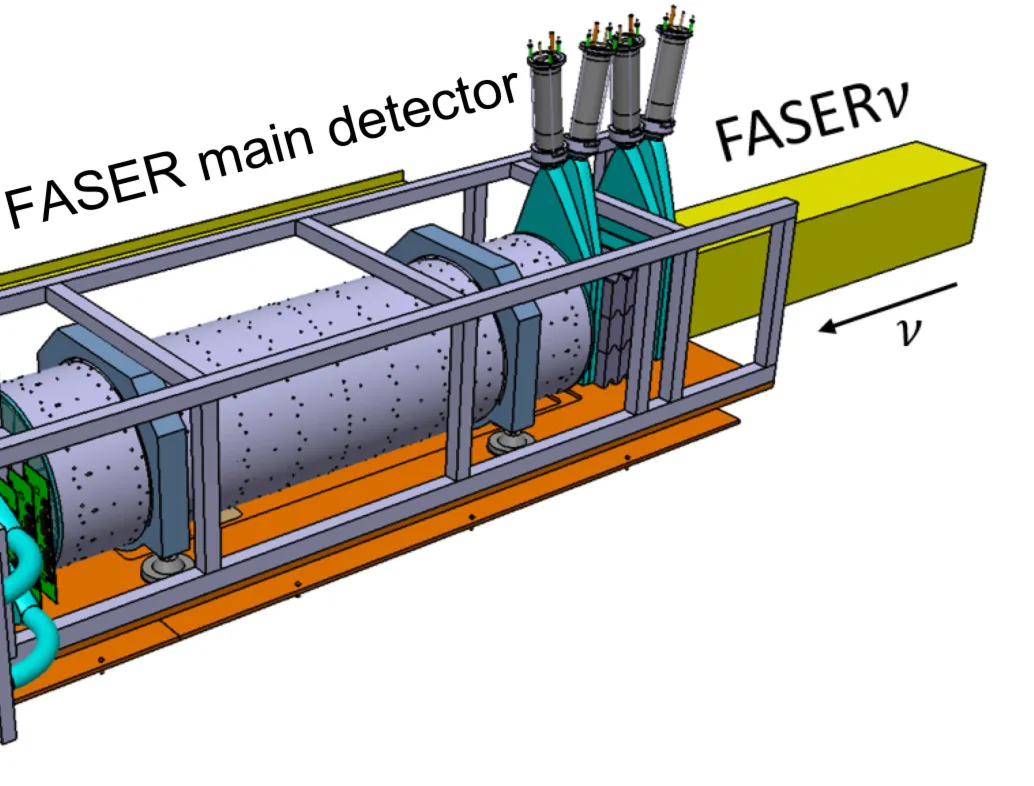
FASER neutrino detector
FASER neutrino detector To date, no neutrino produced at a particle collider has ever been detected, despite the fact that colliders are copious sources of neutrinos. In LHC Run 3 during 2021-23 at 14 TeV center-of-mass energy, roughly 1011 electron neutrinos, 1012 muon neutrinos, and 109 tau neutrinos (along with comparable numbers of anti-neutrinos) will
-
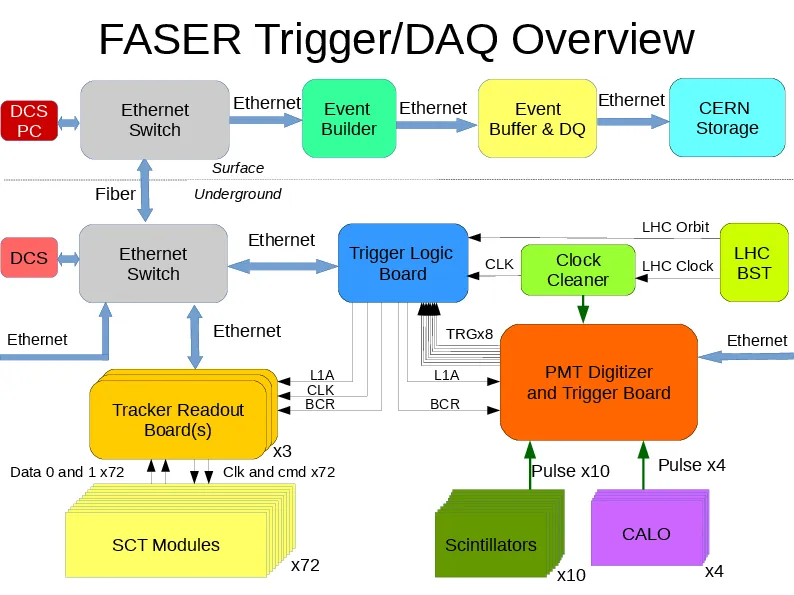
Trigger and data acquisition
Trigger and data acquisition Decays of new light, long-lived particles inside FASER will trigger the detector to store information about the event in the data acquisition (DAQ) system. For redundancy and to detector efficiency measurements, all scintillator layers as well as the calorimeter provide triggering functionality. The scintillator trigger threshold is below that of a
-
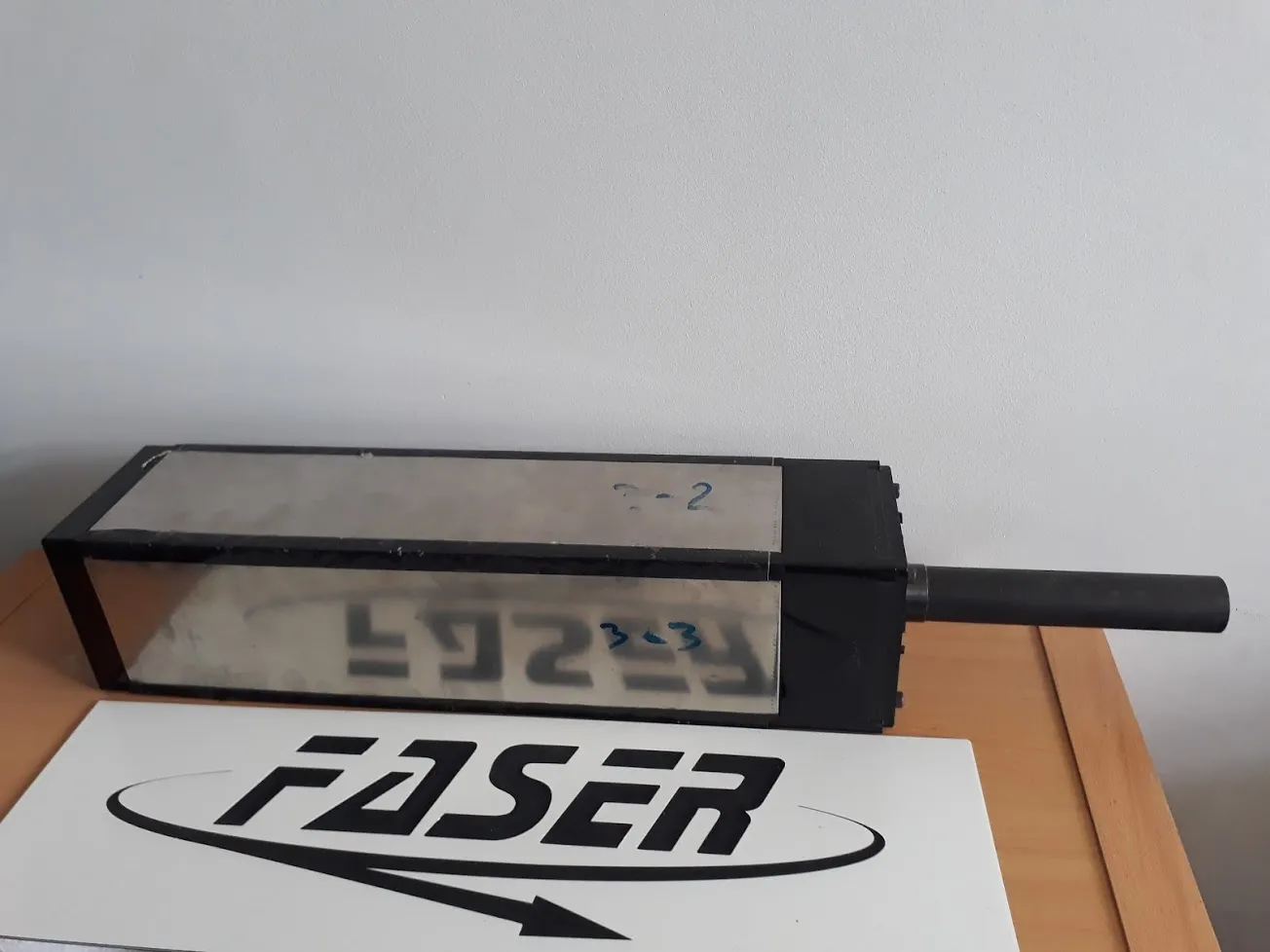
Calorimeter
Calorimeter FASER’s electromagnetic calorimeter is designed to stop high-energy electrons and photons, identify them, and measure their energies. On the other hand, energy deposits from muons and hadrons are minimal. Since most signal events consisting of e+e− or photon pairs separated by less than a few millimeters, it is not feasible to measure the individual
-
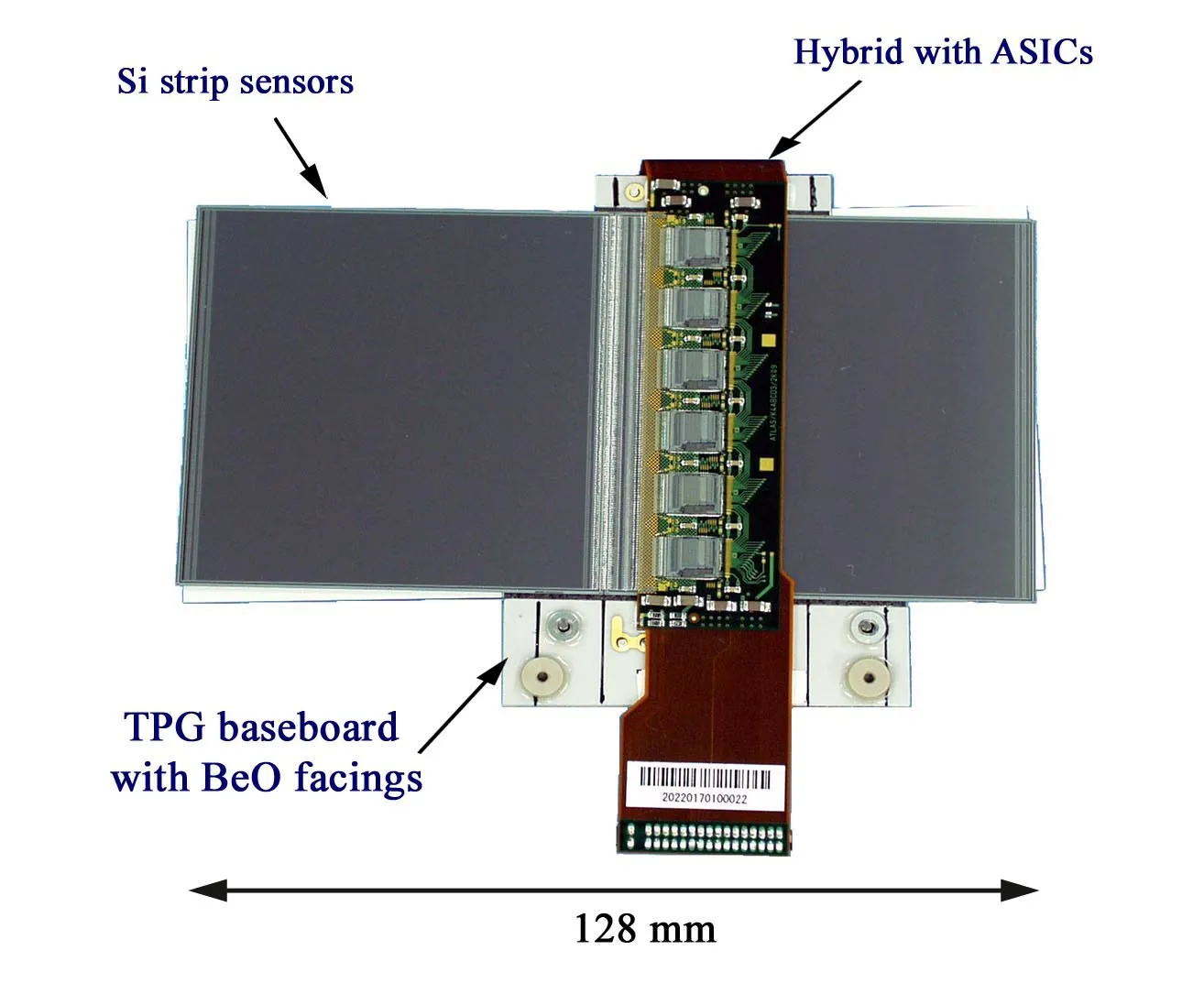
Tracker
Tracker The FASER tracker has been designed to separate and detect two high-energy, oppositely charged tracks originating from a common vertex in the decay volume. For this purpose, three tracking stations are employed, which are separated by two 1 m-long magnets deflecting the charged particle trajectories. The first tracking station is situated right after the
-
Magnets
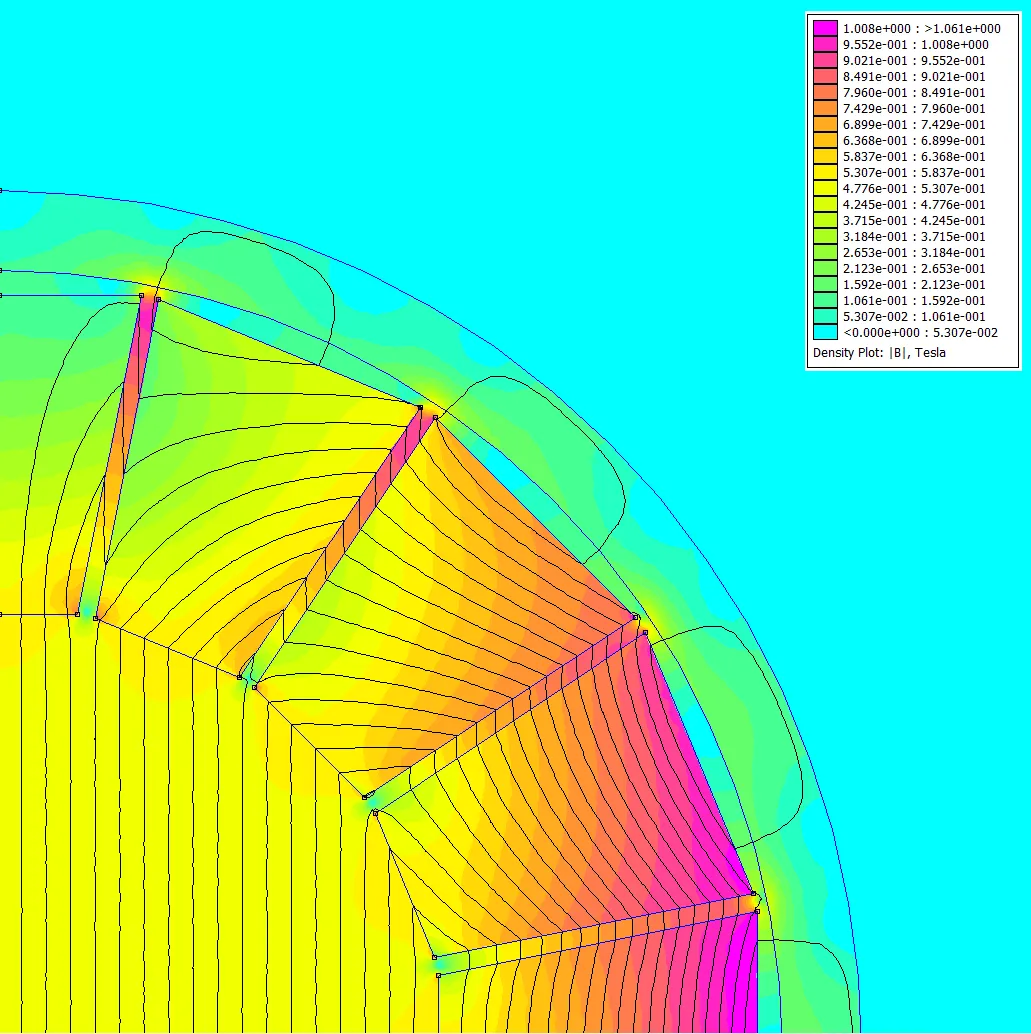
Magnets To achieve sufficient separation of pairs of oppositely charged, high-energy Standard Model particles originating from decays of new physics particles, FASER is equipped with strong magnets designed and manufactured by the CERN magnet group to fulfill technical requirements dictated by the architecture of the TI12 tunnel. FASER uses 0.55 T permanent dipole magnets (see
-
Scintillators
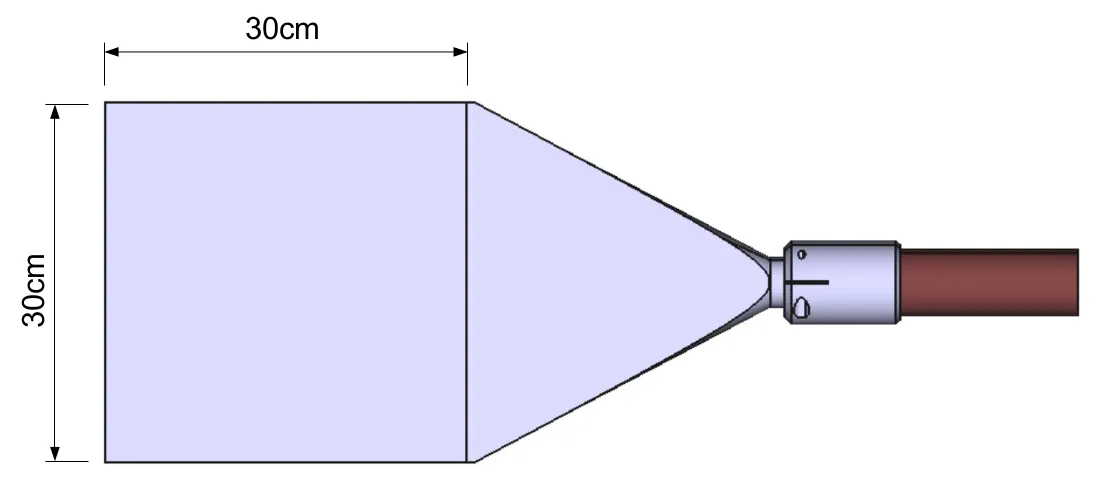
Scintillators The FASER experiment has four scintillator stations that are used to veto charged particles entering the decay volume from the direction of the ATLAS IP. These are used for both triggering and inducing preshowers. The first two stations are the veto stations located in front of the dipole magnets and are primarily used to